Looking for the best shelling beaches Blue Mountain Beach has to offer? The main Old Blue Mountain Road access wins for easy walk-up shelling, Grayton Beach State Park gives you a quieter, more sheltered stretch after storms, and the regional accesses along Scenic Highway 30A see fewer feet churning up the sand. Blue Mountain Beach is not a nationally ranked shelling destination the way Sanibel Island or Marco Island are, but the water’s edge here reliably produces coquinas, moon snails, and scallop fragments, especially in the hour after a Gulf storm rolls through.
Key Takeaways
- Old Blue Mountain Road is the only Blue Mountain Beach access point with both parking and facilities.
- Three additional walkovers on Blue Mountain Road (Gulf Point Road, Sea Grade Road, and Blue Lake Road) offer beach access but have no dedicated parking.
- Grayton Beach State Park, a 7-minute drive from Ocean Breeze, is a strong local pick for shelling on 30A, particularly after storms.
- Southwest Florida destinations like Sanibel, Captiva, and Marco Island remain the state’s premier shelling grounds; 30A and the broader Florida Panhandle are not considered top-tier shelling territory.
- Shelling is best attempted at low tide, right after a storm, or during the first hour of daylight before beach crowds and boat wake disturb the sand.
- Florida shell-collecting etiquette prohibits taking any shell that still has a living animal inside it, a rule that applies across the Gulf Coast.
If you’ve got a family trip to Blue Mountain Beach on the calendar for 2026 and shelling is on the agenda, you’re probably wondering whether it’s worth building a whole morning around, or just something to do if the kids get restless. This stretch of the Emerald Coast isn’t marketed as a shelling destination. The sand here still turns up shells on a normal morning walk.
I’ve walked this beach at sunrise more times than I can count, mostly because Ocean Breeze, our three-bedroom rental on Blue Mountain Beach, sits a 10-minute walk from the water, and an early walk before the day heats up is part of the routine. What follows is a local’s honest read on where to look, when to go, and what you’ll find, plus how Blue Mountain Beach stacks up against the destinations that get all the shelling headlines.
This guide covers the access points along Blue Mountain Road, the tide and timing windows that matter most, and the shell types you can realistically expect, along with an honest comparison to Grayton Beach State Park and the southwest Florida beaches that outrank everything on 30A for shell volume.
Why Is Blue Mountain Beach Underrated (and Also Not a Top Shelling Spot)?
Blue Mountain Beach is a coastal community along Scenic Highway 30A in South Walton County that sits on what locals call the tallest natural point on the Emerald Coast. The dune here gives the area a distinct look: sugar-white sand stacked against tall grassy slopes. That elevation has nothing to do with shell volume.
Shelling along the water’s edge is a favorite local pastime, and shells can almost always be found. At the same time, 30A and the broader Florida Panhandle are not among Florida’s top shelling destinations. Both things are true at once.
What that means in practice: you’ll find shells nearly every time you walk the shoreline, mostly coquinas, small scallop halves, and moon snail fragments. You won’t fill a bucket with the large, intact specimens that made Sanibel Island famous. Blue Mountain Beach became part of the greater Dune Allen area in 1948, and the community has stayed smaller and quieter than Seaside or Rosemary Beach ever since. That’s exactly why the sand here sees less foot traffic and, on a good morning, holds onto more shells than the busier beach accesses down the highway.
For families staying at Ocean Breeze, that’s the honest pitch: a casual shelling walk folded into a beach morning, not a dedicated shell-hunting expedition.
What Are the Best Times and Tides for Shelling at Blue Mountain Beach?
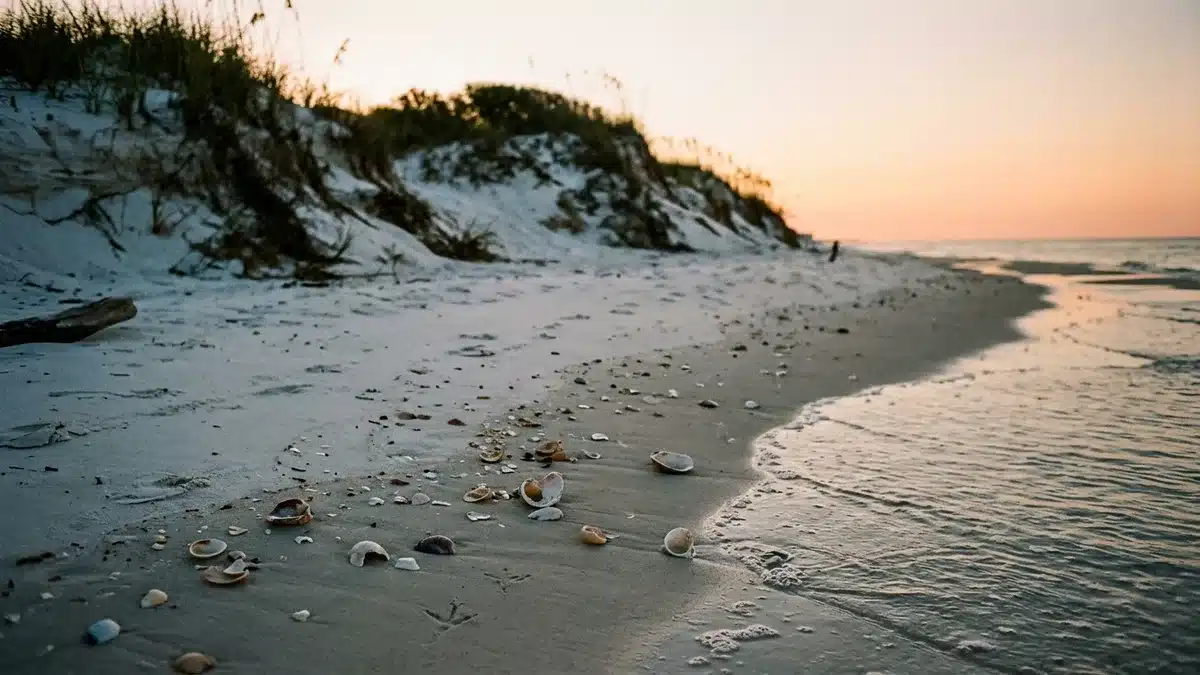
The best time to look for shells at Blue Mountain Beach is low tide during the first hour after sunrise, or the morning immediately following a Gulf storm. Low tide exposes a wider band of wet sand where shells settle, while early light means fewer walkers and joggers have already kicked through the freshest debris.
Storms matter more here than tide charts alone. Wave action churns up material from farther offshore and deposits it along the tideline, so shelling right after a storm gives you a noticeably better selection than a calm day. On 30A, that typically means checking the beach the morning after a summer thunderstorm rolls through, or after a tropical system passes well offshore during hurricane season, which runs from June through November for the Gulf Coast.
Florida sun is intense even early in the day, and Blue Mountain Beach’s exposed, dune-backed shoreline offers little natural shade near the water. Bring sunscreen and a hat even for a 7 a.m. walk.
As a practical note for families staying nearby, standard Blue Mountain Beach vacation rental check-in runs around 4 p.m. with checkout around 10 a.m., so plan your best shelling outing for the day after arrival, once you’ve settled in and scoped the tide yourself.
What Types of Shells Can You Find at Blue Mountain Beach?
Shell varieties at Blue Mountain Beach lean toward smaller, common Gulf species rather than the large, showy specimens found farther south. Expect coquina shells in pastel colors, broken and whole scallop shells, moon snail shells, and occasional whelk fragments. Sand dollars wash in seasonally rather than year-round.
Coquinas are the shell you’ll notice first: small, wedge-shaped, and often still alive when the surf pulls them back under the sand, which is your cue to leave them be and let the tide do its work. Scallops turn up mostly as single valves rather than matched pairs, a sign of natural wear rather than a poor beach. Sand dollars appear less predictably, and when they do, you’ll often find them just offshore in the shallows rather than dry on the sand.
Shells along the 30A and Panhandle coast shift with the season, so a walk in March can look different from a walk in August. Fall and winter, after the peak crowds thin out and storm activity from earlier in the season has had time to redistribute material, tend to produce a slightly better mix, though nothing here compares to the volume divers and beachcombers report from Sanibel or Captiva.
For kids, the smaller, colorful coquinas are the better find: easy to spot and satisfying to collect in handfuls along the tideline on a calm morning.
Where Should You Access the Beach for Shelling in Blue Mountain Beach?
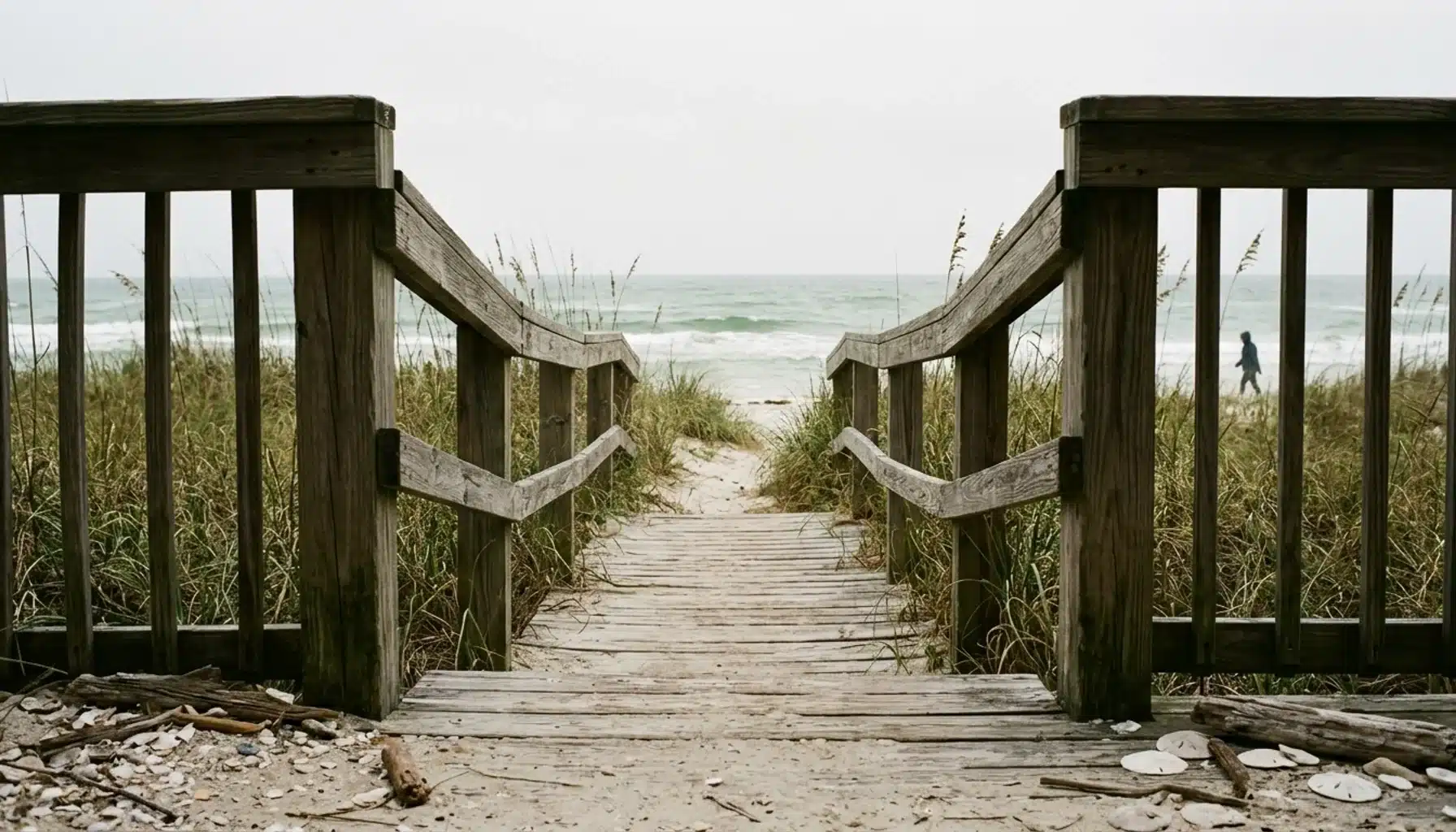
The main public access for Blue Mountain Beach shelling sits at the end of Old Blue Mountain Road, the only access point in the immediate area with both parking and facilities. This is your best starting point if you’re driving in or don’t want to walk far with kids and gear.
Three additional walkover access points sit along Blue Mountain Road itself: at Gulf Point Road, Sea Grade Road, and Blue Lake Road. None of these three have dedicated parking, so they work best for guests staying within walking distance rather than day-trippers arriving by car. If you’re staying at Ocean Breeze, a 10-minute walk gets you to the sand near these quieter walkovers, and fewer cars usually means fewer feet on the beach when you arrive.
A short drive east brings you to the Blue Mountain Regional Beach Access, a public access point rated 4.6 stars with over a hundred reviews, offering another parking option with facilities if Old Blue Mountain Road is full, which it regularly is by mid-morning during peak summer season.
For a different shelling environment, the drive to Grayton Beach State Park takes about 7 minutes from Ocean Breeze. Grayton Beach State Park stands out as a top local spot for shell collecting on 30A: a pristine, less-crowded beach that rewards a visit right after storms. The park’s coastal dune lake and protected shoreline see less daily foot traffic than the open beach accesses closer to town, which helps explain why more shells survive the tideline undisturbed.
| Access Point | Parking | Facilities | Drive/Walk Time from Ocean Breeze | Best For |
|---|---|---|---|---|
| Old Blue Mountain Road | Yes | Yes | Approx. 10-minute walk | Families, easiest access |
| Gulf Point Road walkover | No | No | Walkable from Ocean Breeze | Quiet early-morning shelling |
| Sea Grade Road walkover | No | No | Walkable from Ocean Breeze | Fewer crowds |
| Blue Lake Road walkover | No | No | Walkable from Ocean Breeze | Fewer crowds |
| Blue Mountain Regional Beach Access | Yes | Yes | Short drive | Overflow parking, families |
| Grayton Beach State Park | Yes (fee area) | Yes | Approx. 7-minute drive | Best local shelling after storms |
How Does Blue Mountain Beach Compare to Sanibel Island for Shelling?
Blue Mountain Beach and Sanibel Island serve two very different shelling experiences. Sanibel Island, located off Florida’s southwest Gulf Coast near Fort Myers, is internationally recognized as one of the top shelling beaches in North America, largely due to its unusual east-west orientation, which catches shells that would normally pass by a typical north-south barrier island.
Visit Florida’s own statewide shelling guide names Sanibel and its neighbor Captiva Island among its favorite Gulf-side shelling destinations, alongside Marco Island, Bonita Beach, and Anna Maria Island. No Panhandle or 30A beach appears on that list. That reflects a real geographic difference in currents, offshore shelf depth, and shell deposition patterns between the Emerald Coast and southwest Florida.
If your primary vacation goal is filling a bucket with large, intact horse conchs and lightning whelks, Sanibel or Captiva is the better trip. If shelling is one part of a broader family beach trip that also includes swimming and evenings on a rooftop watching the sunset, Blue Mountain Beach delivers a satisfying, low-key version of the activity without needing a separate destination trip.
Some coverage of Panhandle shelling points to Navarre, roughly an hour or so west of Blue Mountain Beach, as a strong regional pick. Even that claim comes with the caveat that it’s a Panhandle pick, not a statewide one. Marco Island and the southwest Florida coast remain in a different league entirely.
What Shelling Techniques and Equipment Actually Improve Your Results?
Effective shelling technique at Blue Mountain Beach centers on timing, not gear. Walk the wet sand at the tideline during low tide, scan rather than dig, and move slowly enough to spot shells the wave just uncovered before the next one buries them again.
Bring a mesh shelling bag rather than a plastic grocery bag. A mesh bag drains sand and water on the walk back, keeping your finds clean and your hands free. A small garden trowel helps for shells partially buried in wet sand, though at Blue Mountain Beach most of what you’ll find sits right on the surface.
Polarized sunglasses cut glare off the water and make it easier to spot shell color against wet sand, especially in harsh midday sun. Water shoes are worth packing too; the shallow surf near the walkovers can hide broken shell fragments that are uncomfortable barefoot.
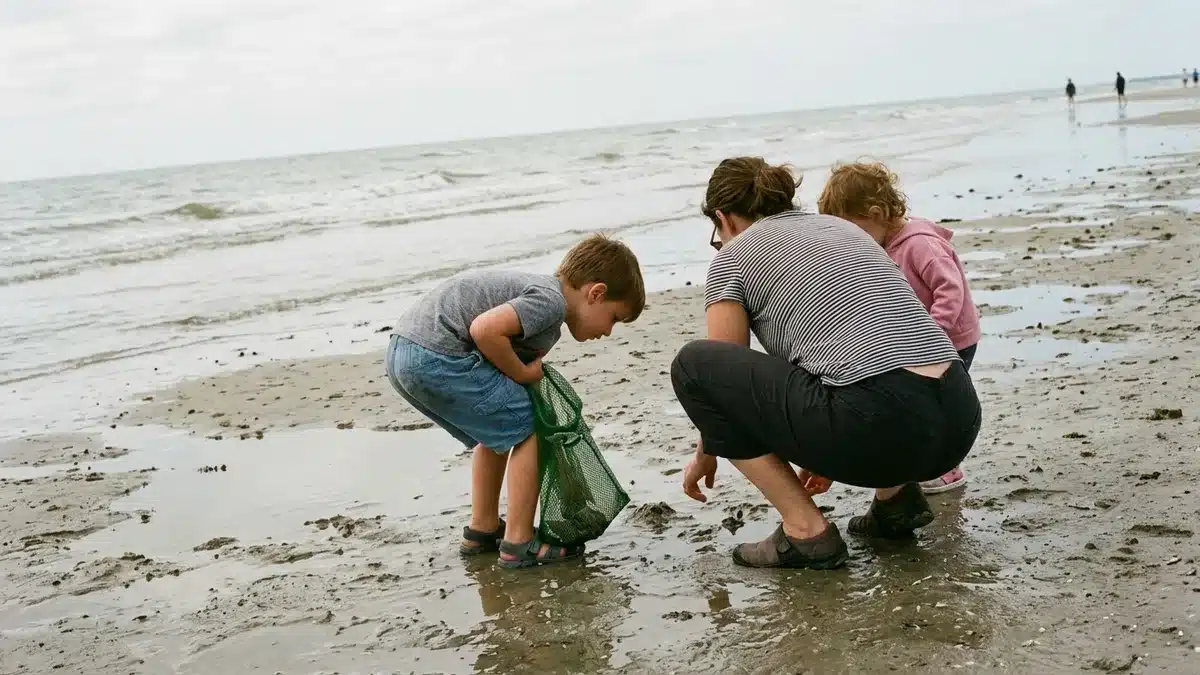
For families with young kids, give each child their own small bucket and let them claim whatever they find, coquinas included, then release the live ones together as a mini lesson in beach etiquette before heading back for breakfast.
Are There Rules or Restrictions on Collecting Shells at Blue Mountain Beach?
The core rule for shell collecting anywhere on Florida’s Gulf Coast, including Blue Mountain Beach, is simple: never take a shell with a living animal still inside it. This is the baseline etiquette rule for Florida beachcombing, and it applies whether you’re picking up a coquina, a moon snail, or a hermit crab that’s borrowed an empty shell as a home.
Within state park boundaries like Grayton Beach State Park, additional collection guidelines can apply, and rules can be updated periodically, so check current signage at the park entrance or the Florida State Parks website before your visit rather than assuming last year’s rules still hold in 2026.
Outside state park land, general public beach access points along Blue Mountain Road don’t restrict casual shell collecting for small personal quantities, which is standard for most Gulf Coast beaches. If you’re unsure, collect only what fits comfortably in a small bag per person and leave anything that looks alive exactly where you found it.
Live shells and the small crustaceans that inhabit empty ones keep the beach ecosystem functioning.
What Should Families Pack for a Shelling Morning?
A successful shelling trip with kids at Blue Mountain Beach requires minimal gear: reef-safe sunscreen, water shoes, a mesh collecting bag per person, and a reusable water bottle, since there’s little shade along most of the open beach accesses.
Start early, ideally within an hour of sunrise during summer, when the sand hasn’t heated up yet and the beach is at its quietest. Bring a lightweight cooler with breakfast items or snacks so the outing can stretch into a full morning without a mid-walk meltdown over hunger.
If you’re staying at Ocean Breeze, the property’s complimentary bikes make the walkover access points along Blue Mountain Road even easier to reach without loading up the car, and the fenced backyard with an outdoor shower back at the house means kids can rinse off sand before tracking it through the living room. Anyone who’s dealt with sandy car seats after a beach morning knows exactly why that outdoor shower matters.
A golf cart or bikes also make it simple to check two or three access points in one outing rather than committing to a single spot, since shell distribution can vary noticeably from one walkover to the next depending on how the previous night’s tide moved through.
What Are the Best Nearby Amenities for a Shelling-Focused 30A Trip?
The most convenient home base for a Blue Mountain Beach shelling trip is a property within walking distance of both the sand and a proper kitchen, since post-beach breakfast and shell-cleaning happen a lot easier at a rental than a hotel room.
Ocean Breeze, our three-bedroom, three-bathroom house in Blue Mountain Beach, sits a 10-minute walk from the sand and sleeps up to 12 guests across a king suite, two queen rooms, and a queen sofa sleeper, making it a comfortable fit for a multi-generational family doing morning shelling walks followed by an afternoon at the pool. The chef’s kitchen with island seating means you can rinse, sort, and display the morning’s shell haul on the counter while breakfast is going.
After a sandy morning, the walk to nearby restaurants stays easy since Ocean Breeze sits within walking distance of Mimmo’s for wood-fired pizza and Cowgirl Kitchen for a casual lunch. Red Fish Taco covers dinner on the patio. Evenings work well on the rooftop Sky Lounge, where the outdoor projector turns shell-sorting and a movie into one easy activity for tired kids.
South Walton draws heavy visitor traffic during summer, so booking a rental with true walkability to the beach access points covered above saves real time during peak season when parking at Old Blue Mountain Road fills up fast.
Practical Guidance: How Should You Plan a Shelling Trip to Blue Mountain Beach in 2026?
Start by choosing your access point based on group size and mobility. Families with strollers or older relatives should head to Old Blue Mountain Road for the paved parking and facilities. Groups comfortable walking should try the quieter Gulf Point Road, Sea Grade Road, or Blue Lake Road walkovers instead.
- Check the tide chart the night before and plan your walk around low tide, ideally within the first two hours after sunrise.
- Check recent weather; if a storm passed through in the last day or two, prioritize that morning over a calm-weather day.
- Pack a mesh bag, water shoes, and reef-safe sunscreen for every person, not just the kids.
- Walk the wet sand slowly at the tideline rather than the dry upper beach, where shells rarely wash up intact.
- If shelling is a top priority for your trip rather than a side activity, budget a day trip toward Grayton Beach State Park or, for a serious shelling vacation, consider Sanibel or Marco Island as a separate destination.
- Release any shell that shows signs of life, and rinse the rest back at your rental before packing them for the trip home.
The most common mistake visitors make is expecting a Sanibel-level haul on a Panhandle beach. Set expectations for a relaxed, casual shell walk instead of a treasure hunt, and the morning tends to land a lot better with everyone, especially kids who just want to find something and put it in a bucket.
Frequently Asked Questions
Which specific areas of Blue Mountain Beach have the most shells?
The stretch near Old Blue Mountain Road and the quieter walkovers at Gulf Point Road, Sea Grade Road, and Blue Lake Road tend to hold the most shells, especially early in the morning before foot traffic picks up. Grayton Beach State Park, a short drive away, is a top local shelling spot on 30A.
What types of shells can you find at Blue Mountain Beach?
Common finds include coquinas, scallop shell halves, moon snail shells, and occasional sand dollars, which appear more seasonally than year-round. Larger, intact specimens like whelks and conchs are rare compared to southwest Florida beaches.
How does Blue Mountain Beach compare to Sanibel Island for shelling?
Sanibel Island is widely recognized as one of Florida’s top shelling destinations due to its unique east-west shoreline orientation, and Visit Florida lists it among the state’s premier Gulf-side shelling spots. Blue Mountain Beach offers casual, everyday shelling as part of a beach trip rather than a dedicated shelling destination experience.
Are there any local restrictions on shell collection at Blue Mountain Beach?
The universal rule across Florida’s Gulf Coast is never to collect a shell with a living animal inside it. Within Grayton Beach State Park boundaries, check current posted rules at the park entrance, since park-specific guidelines can be updated periodically.
Can children find shells easily at Blue Mountain Beach?
Yes. Small coquinas are abundant and easy for kids to spot along the tideline, making them a satisfying, low-effort find for younger children compared to searching for rarer, larger shells.
What are the best months for shelling at Blue Mountain Beach?
Fall and winter months tend to produce a slightly better shell mix after summer storm activity redistributes material along the shoreline, though shells can be found year-round. Early morning low tide matters more than the specific season.
Is Blue Mountain Beach a good destination for a dedicated shelling vacation?
Not for a dedicated, high-volume shelling trip; the Panhandle isn’t among Florida’s top shelling regions. It works well as a relaxed, secondary activity during a broader family beach vacation on 30A.
Blue Mountain Beach won’t out-shell Sanibel Island or Marco Island, and no honest local guide should tell you otherwise. Among the best shelling beaches Blue Mountain Beach can offer, an easy, low-pressure walk built into a broader 30A trip is the real draw: best done at low tide near Old Blue Mountain Road or the quieter walkovers along Blue Mountain Road, with Grayton Beach State Park as your upgrade option after a storm. Set the right expectations going in, and the sand here still delivers a good morning for families in 2026 and beyond.
If your family’s Blue Mountain Beach trip includes a morning of shelling near Old Blue Mountain Road, Ocean Breeze puts you a 10-minute walk from that same sand, with an outdoor shower ready for rinsing off before anyone tracks sand through the house. Check dates directly at 30abeachouse.com.
Content powered by inkSTR.co